
Kakai Pumpkins: All About the Seeds

Updated: Jan 10
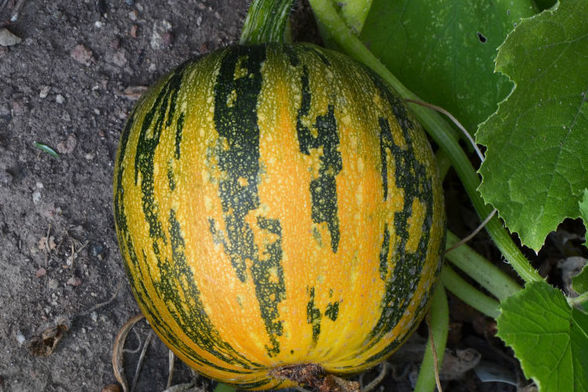
I love a good sugar pumpkin. Truly.
But between the butternut squash cubes stacked in my freezer and the jars of soup tucked away in my pantry, the color orange is abundantly represented.
Kakai pumpkins (Cucurbita pepo var. styriaca) earn their place in my garden for one reason: those little green seed gems hiding inside.
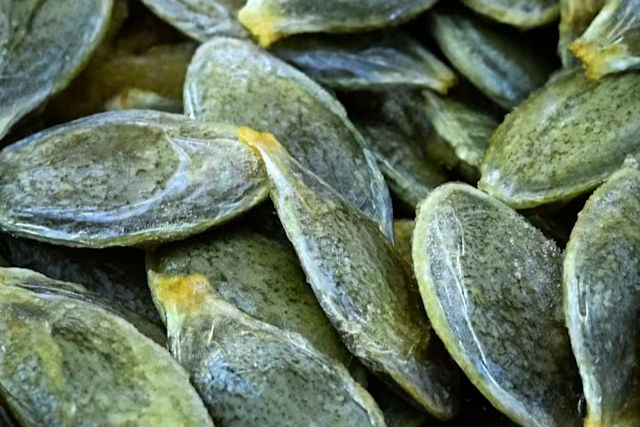
They are tender, hull-less, and deeply satisfying.
Growing Kakai pumpkins in my Zone 6 garden is not for the faint of heart. It’s a race against squash bugs, vine borers, and powdery mildew.
But it’s one I’m happy to run.
What Makes Kakai Pumpkins Special?
Kakai pumpkins are grown primarily for their seeds, not their flesh.
Why gardeners (like me) love them:
Naked seeds – no tough hulls to crack or chew
Bright green kernels – beautiful and nutrient-dense
Versatile – great raw, dehydrated, or sprinkled on everything
The flesh is edible but bland and watery. These pumpkins are about what’s deep inside.
When & Where to Plant
Timing: I direct sow Kakai seeds in the second week of May, after all danger of frost, once soil is truly warm
Sun: Full sun (6–8+ hours)
Soil: Rich, well-drained, amended with compost
Kakai vines are vigorous and sprawling. Give them room—or better yet, give them a way up.
Trellising: Helpful… Eventually
I’ve tried growing Kakai pumpkins both on the ground and on a trellis, and trellising has proven to be my best defense against pests and mildew.
But here’s the honest truth:
Kakai vines resist going vertical at first.
They sprawl.
They sulk.
They flop dramatically toward the ground.
Then—once they round the bend at the top of the trellis—they suddenly get it and start climbing to the other side.
What helps:
Plenty of garden ties
Frequent check-ins during the first few weeks
Gentle redirection instead of force
Once airborne, airflow improves, leaves dry faster, and bugs are easier to spot—and manage.
Pest & Disease Pressure (The Big Three)
Growing Kakai pumpkins means accepting pressure as part of the deal.
Persistent and destructive. Regular inspection helps. Trellising makes it easier to see early damage.
Relentless. Eggs are easier to spot when leaves aren’t layered on the ground.
Nearly inevitable in my Zone 6 garden. Vertical growth slows its spread and buys time for seed maturity.
This is not a quest for perfect vines.
It’s an endurance race to fully mature seeds.

How to Know When the Seeds are Mature
From pollination, Kakai pumpkin seeds need about 45–55 days to fully mature.
That timing matters. Seeds often finish after the pumpkin looks ready.
Signs the seeds are ready:
The pumpkin rind is hard and resists a fingernail scratch
The stem is corky, dry, and woody
The color is fully developed with strong green striping
The fruit feels heavy and solid for its size
If the stem is still green and juicy, the seeds are still finishing inside.
When you cut a mature pumpkin open, the seeds will be:
Deep green
Firm and plump
Uniform in size (not pale or translucent)
Can You Leave Pumpkins on the Vine Until It Dies Back?
Yes—and for seed pumpkins like Kakai, this is often ideal.
I typically leave pumpkins on the vine until the plant naturally declines from age or powdery mildew. By then, seed development is complete.
The risks aren’t about “too long” so much as conditions:
Repeated freeze–thaw cycles
Pumpkins sitting on wet soil
Cold, soaking rains
Rodents discovering them before you do
My rule of thumb:
I leave Kakai pumpkins on the vine as long as:
No hard frost has hit
The rind remains firm and intact
The fruit isn’t sitting in soggy soil
If disease or weather forces an early harvest, I let pumpkins cure indoors for 2–3 weeks. Seeds can continue to finish inside a mature fruit even after harvest.
Seed Saving: A Labor of Love
Cutting seeds out of a Kakai pumpkin is… immersive.
Expect to be:
Elbow-deep in pumpkin
Slathered in what I affectionately call pumpkin “pyuck”
Slightly delighted if you don’t mind the mess
My simple process:
Scoop seeds by hand
Rinse thoroughly to remove pulp
Pat dry
No cracking. No hulling. Just beautiful green seeds.
Eat Some · Save Some · Share Some
(Mostly eat. Occasionally save. Rarely share.)
Since I only plant 3 -5 vines, Kakai pumpkins don’t produce a seed windfall. These are precious goods, and I tend to use them up fast.
🍴 Eat Some
This is the main event.
Raw, straight from the drying rack
Sprinkled over salads and soups
Tossed into trail mix
Stirred into hot cereal for a nutty, green crunch
They rarely make it far from the kitchen counter.
🫙 Save Some
When I show restraint:
I dehydrate the seeds fully
Store them in airtight jars in a cool, dry place
They keep beautifully and are always ready when a meal needs texture.
🎁 Share Some (Occasionally)
I don’t often share Kakai seeds—not because I’m unkind, but because I don’t grow enough to create a surplus.
When I do share:
It’s a small jar for a fellow gardener who understands the effort
Or a pinch scattered over a shared meal, quietly admired
Some harvests are meant to be generous.
Others are meant to be savored.
Final Thoughts About Kakai Pumpkin Seeds
Every year, I briefly question my choices while tying vines and scouting for bugs.
Every year, I change my mind the moment I hold a bowl of those emerald seeds.
Kakai pumpkins don’t make things easy—but they make them worth it.
Growing with you,
Cindy
Disclaimer: I share products and techniques I genuinely use and trust in my own garden and kitchen. None of the links on this site are affiliate links, and I don’t receive compensation for recommendations.

