
Compost Happens

My composting journey has not been elegant.
It started with optimism and a shovel—burying vegetable scraps wherever I could dig a hole in the yard. Corn cobs here. Lettuce ends there. It felt thrifty and virtuous, and for a while, it worked… until I started forgetting where I’d buried things.
Next came a big plastic composter, the kind with a lid that promises tidy decomposition and zero effort. Then I added a tumbling composter, because surely rotation was the missing ingredient to composting success. I even tried special compost starters. If they helped, I couldn’t tell—the pile seemed entirely unimpressed.
Eventually, I realized composting isn’t really about finding the right system—it’s about trusting the process once the system gets out of the way.
The Compost Heap Era
These days, I compost in a 12 x 3 x 2–foot heap made of hardware cloth, held upright with 3-foot lengths of rebar. No lid. No crank. No instructions.
Just a pile.
And honestly? It’s the best compost system I’ve ever had.
The size matters. A pile this large holds heat well, breaks material down faster, and forgives inconsistency. Miss a turn? It’s fine. Add too many scraps one week? Still fine. Composting, it turns out, likes a little chaos.
Kitchen Scraps, Minus the Fruit Fly Circus
I also learned—through trial and a lot of fruit flies—that composting doesn’t start in the kitchen.

Instead of a charming ceramic countertop bucket (which inevitably becomes a fruit fly resort), I use a plain one-gallon office trash can on the back porch. Coffee grounds, vegetable trimmings, eggshells—everything goes in there.
Every other day or so (more often in the heat), I walk it out to the heap and dump it in. No smells indoors. No flies hovering near the bananas. No guilt when I forget to empty it overnight.
It’s not pretty. It is effective.
Seasons Do the Work
By the end of each growing season, my compost heap looks almost ridiculous—towering with vines, spent plants, and end-of-season garden cleanup that seems like it couldn’t possibly break down.
And then winter arrives.
No turning. No managing. No drama.

By spring, the heap has settled dramatically, shrinking into itself as if it quietly did the work while no one was watching.
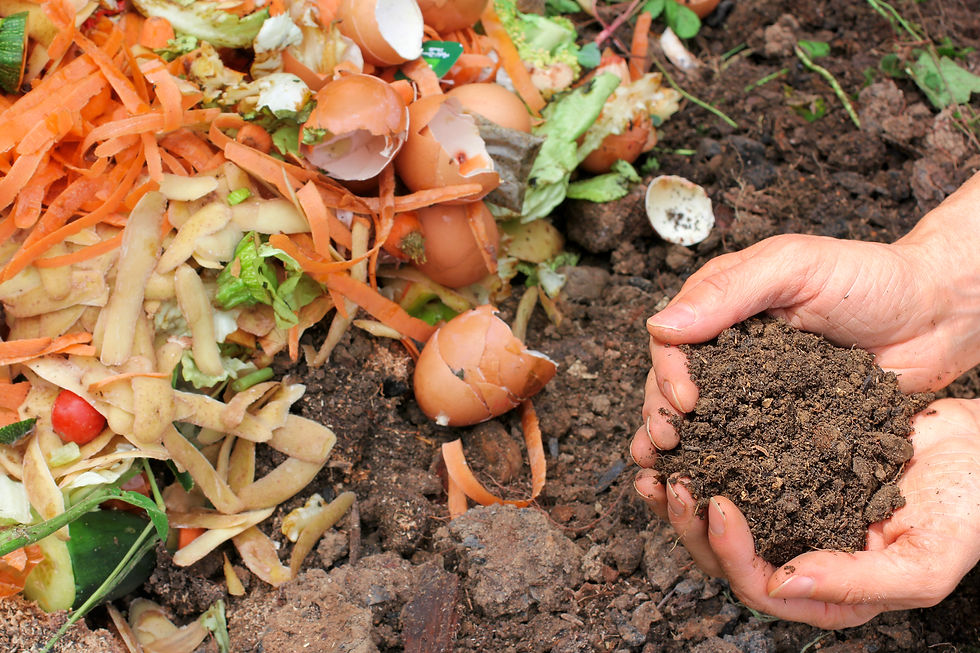
That’s when I harvest the finished compost from the bottom of the heap—dark, crumbly, and smelling like the forest floor. Sometimes the compost I harvest in March is still a little half-baked—clumpy, damp, not quite finished. Instead of fussing with it, I dig a trench down the middle of the beds and bury it.
By April or May, when I start planting in earnest, it’s fine. The soil finishes what the pile started.
The top layer stays right where it is, becoming the foundation for the next year’s pile.
No emptying. No restarting. No reset button.
Just a continuous, reliable cycle.
How Scraps Become Soil
At its core, composting is just biology doing what biology does best.

Carrot peelings don’t turn into dirt on their own. They’re broken down by an entire underground workforce—bacteria, fungi, insects, worms, and other microorganisms—each taking a turn at the job. The carrot provides energy and nutrients. The microbes do the eating.
Early on, bacteria dominate, especially when the pile is warm. They break down sugars and soft tissues, generating heat as a byproduct. As materials toughen and cool, fungi and slower decomposers move in, handling woody bits, stems, and anything that resisted the first round.
Oxygen helps. Moisture matters. Carbon balances nitrogen. But none of this needs micromanaging.
Given enough mass, contact with soil, and time, the pile regulates itself. Heat rises and falls. Materials collapse inward. What started as recognizable scraps becomes humus—stable organic matter that holds nutrients, retains moisture, and feeds plants slowly.

That’s why half-finished compost still works. Even when it looks clumpy or damp in March, the biology hasn’t stopped—it’s just mid-sentence. Bury it, and the soil community picks up where the pile left off.
The science is steady, patient, and remarkably tolerant of imperfection.
What I’ve Learned Along the Way
Composting has taught me a few things that apply well beyond the garden:
Bigger systems are more forgiving.
Convenience beats perfection.
Additives are optional.
Winter counts.
I still add leaves, straw, and garden debris to balance the kitchen scraps. I turn the pile with a pitchfork when I feel like it. Sometimes I don’t.
And somehow, every season, it turns into dark, generous compost that feeds the next round of growth.
That’s been the quiet lesson for me: progress doesn’t require polish. Work doesn’t have to be finished to be useful—it just needs somewhere to land, time to settle, and permission to keep going.
Because compost happens.
Growing with you,
Cindy
Disclaimer: I share products and practices I genuinely use and trust in my own garden. None of the links on this site are affiliate links, and I don’t receive compensation for recommendations.


