
Potatoes: Dirt, Delight, and the Occasional Snake


Potatoes ask very little and give a lot in return. A handful of seed potatoes, some loose soil, and a bit of patience—and months later you’re standing over a patch of earth, gently brushing soil aside, discovering treasure where you least expect it.
Harvesting potatoes really is like witnessing a small miracle. One plant. Many potatoes. Hidden until the very last moment.
And if I’m honest, there’s also a flicker of hesitation for me now. One year, reaching into the soil, I met a garden snake doing exactly what snakes do: enjoying a cool, protected place.
Ever since, potatoes come with both delight and a pause. I dig more slowly. I look twice. Awe mixed with respect.
Getting Started: Planting Potatoes
Potatoes grow from seed potatoes—small tubers (or pieces of larger ones) with visible “eyes.” Each eye can send up a shoot that becomes a plant.
If a forgotten potato on your kitchen counter starts to sprout, you can plant that too—just know grocery store potatoes aren’t certified disease-free, so I keep them in a separate bed and treat it as a happy experiment.
When to plant
Early spring, once the soil can be worked (St. Patrick's Day is my cue in Zone 6)
Potatoes tolerate cool soil better than most crops
How to plant
Dig a trench 4–6 inches deep
Place seed potatoes 10–12 inches apart, eyes facing up
Cover lightly with soil
As the plants grow, keep hilling—pulling soil or mulch up around the stems. This protects developing tubers from sunlight (which turns them green and bitter) and encourages higher yields.
Potatoes prefer consistency over fussing. Water during dry spells. Let the leaves sprawl and photosynthesize without interference.
The Middle Season: What’s Happening Underground (and Above)
Above ground, potato plants are unassuming—broad green leaves and, if conditions are right, delicate flowers in white, pink, or pale purple.

Those flowers sometimes develop into small green fruits that look like cherry tomatoes. These are potato berries, and yes—they contain seeds.
A quick note of curiosity and caution:
The berries themselves are toxic and not edible.
The seeds inside are called true potato seed.
They can be planted, but they won’t grow true to the parent plant—ironic, given they’re called true potato seed.
Growing potatoes from seed is a slow, experimental process—more plant breeding than gardening. For reliable results, tubers are the way to go. I usually let the flowers bloom (pollinators appreciate them) and don’t worry if berries appear. They’re interesting, but not necessary.
Below ground, the real work is happening quietly. Stolons stretch outward. Tubers swell slowly, storing energy one pocket at a time. This hidden growth is part of what makes harvest feel so magical—you never quite know what you’ll find.
Managing Common Potato Pests
Potatoes have a few regular visitors. None require panic—but all benefit from paying attention.
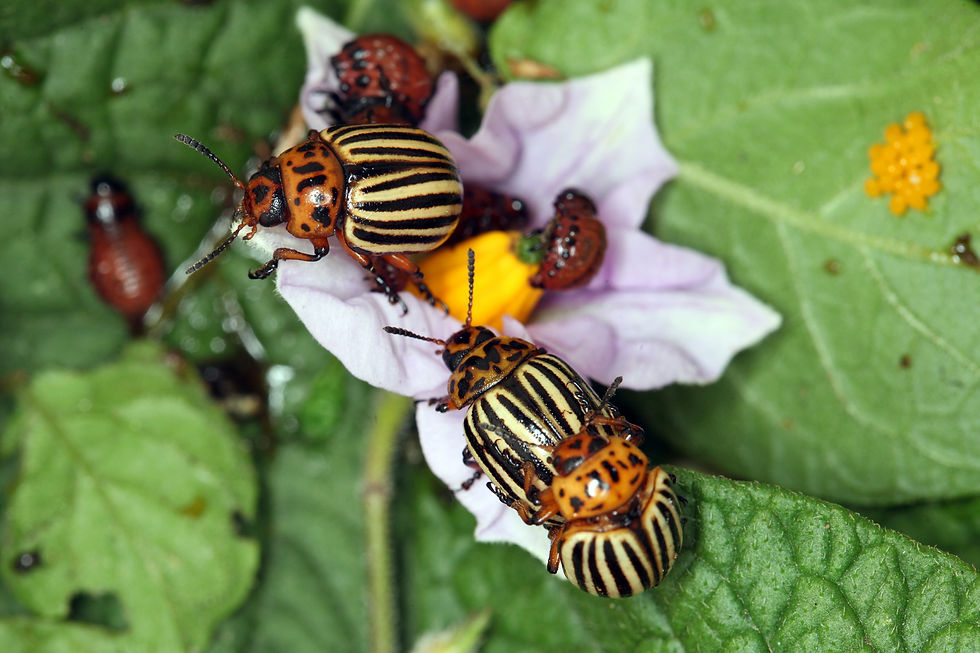
Colorado potato beetles: striped adults and reddish, spotted larvae
Hand-picking early in the season is surprisingly effective
Check undersides of leaves for bright orange egg clusters
Aphids: small, soft-bodied insects that cluster on new growth
Often managed with strong sprays of water or encouragement of beneficial insects

Wireworms: slender larvae that tunnel into tubers
Best managed through crop rotation and patience
For me, pest management is mostly about presence—walking the garden, looking closely, intervening early and gently. A few chewed leaves rarely affect the harvest.
And occasionally, the “pest” is a snake. In that case, the solution is simple: pause, step back, and let everyone keep doing what they’re doing.
The Tower Experiment (and Why I Let It Go)
I’ve tried growing potatoes above ground in wire fencing towers—layered with soil and straw, clever in theory.
In reality, the towers dried out too quickly, and one season a strong wind sent the whole thing tumbling—soil, plants, and good intentions scattered across the garden.
That was enough for me.
Potatoes don’t need innovation, in my opinion. They need cool soil, steady moisture, and time. Now I plant them in the ground and enjoy the dig—the slow brushing back of soil, the quiet reveal.
Simpler. Sturdier. And far more satisfying.
When to Harvest: Timing the Miracle
You can harvest potatoes in two ways:
New potatoes
Dig gently a few weeks after flowering
Small, tender, and best eaten right away
Main crop potatoes
Wait until the foliage yellows and dies back
This signals the tubers are mature and ready for storage
Harvest on a dry day if possible. Start a little distance from the plant and work inward, using your hands or a garden fork. This is where I slow down—for the potatoes, and for myself.
Every lift of soil holds possibility.
Storing the Harvest
Let potatoes cure in a cool, dark, well-ventilated place for a week or two. Brush off excess dirt (no washing yet), then store them somewhere cool and dark. They’ll keep for months—quiet abundance waiting patiently.
I don’t grow so many potatoes that I’ve ever felt the need to can or freeze them on their own. Between the starchiness of some varieties and the extra steps involved, it’s always felt a little fussy for what I get in return—especially since potatoes have a way of turning soft and mushy once preserved.
Instead, I dice a few and tuck them into a pressure-canned vegetable soup, built from whatever happens to be abundant at the moment: potatoes, green beans, corn, carrots, onions, herbs. There’s no real recipe—just the season in a jar. When I open a can, I add beans or diced chicken for protein and turn it into a simple, satisfying meal.

Delight, with a Little Respect
Ever since the snake encounter, potatoes have taught me that joy doesn’t have to be reckless to be real. Delight can coexist with caution. Awe can include a pause.
Each harvest still feels like a small miracle. I just meet it with steadier hands now—grateful for what’s revealed, and mindful of what might be sharing the soil.
And honestly? That feels about right.
Growing with you,
Cindy


